
Therapeutic Massage vs. Relaxation Massage: The Biomechanical and Insurance Realities
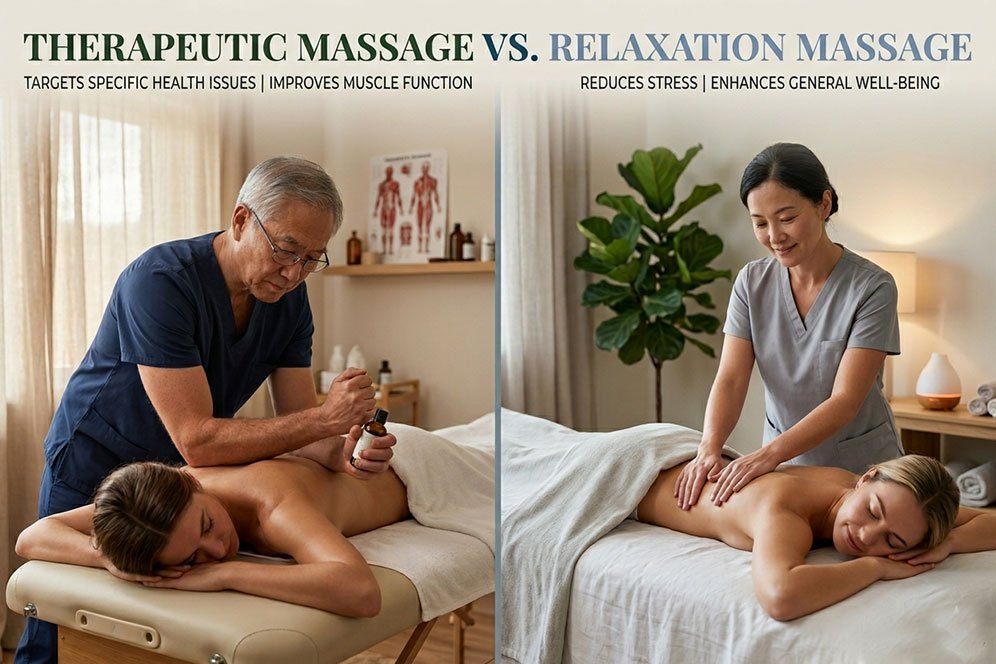
To the untrained eye, any service performed on a massage table looks identical: a client rests on a table while a practitioner applies manual pressure to soft tissue. However, from a clinical, anatomical, and insurance reimbursement standpoint, therapeutic massage and relaxation massage are entirely distinct modalities.
For patients across Ontario navigating extended health care benefits—and for startups establishing new paramedical operations—confusing these two terms can lead to denied insurance claims, auditing issues, or ineffective recovery plans. To achieve top-tier digital authority in the Canadian paramedical landscape, we must analyze the structural, neurological, and regulatory differences that separate these two treatments.
The Core Definitions: General Wellness vs. Targeted Intervention
The primary distinction between these modalities lies in their clinical objectives. While relaxation bodywork aims to down-regulate the nervous system uniformly, therapeutic interventions isolate specific anatomical dysfunctions.
Relaxation Massage (Swedish/Wellness Model)
Relaxation massage is a holistic treatment focused on systemic stress reduction, transient muscle tension relief, and overall mental peace. It utilizes broad, rhythmic strokes to increase surface-level circulatory flow without altering deep structural tissues. It is a highly effective wellness intervention, but it operates without a diagnostic framework.
Therapeutic Massage (Clinical/Rehabilitative Model)
Therapeutic massage is an objective, assessment-based medical intervention. It targets specific physical pathomechanics—such as chronic injury, scar tissue formation, post-surgical immobility, or myofascial pain syndrome. It relies on comprehensive orthopaedic testing, localized mechanical force, and an iterative plan of care focused on functional, measurable tissue recovery.
Biomechanical Target Differences: How the Body Responds
The physiological changes triggered by these two approaches target completely different layers of muscle, fascia, and neural pathways.
1. Neurological vs. Mechanical Load
- Relaxation: Utilizes long, flowing superficial strokes (effleurage) and gentle kneading (petrissage). This application down-regulates the sympathetic nervous system (“fight or flight”) and stimulates parasympathetic dominance. The force remains primarily within the superficial dermal and fascial layers.
- Therapeutic: Employs localized, multi-directional force. Techniques like deep tissue manipulation, myofascial release, and trigger point therapy apply direct, concentrated pressure to reorganize dense, misaligned collagen fibers. This mechanical load helps break down internal adhesions and restores normal gliding mechanics between muscle layers.
2. Tissue Depth and Anatomical Isolation
- Relaxation: Distributes mechanical pressure evenly across entire kinetic chains (e.g., the full back, legs, and arms) to maximize sensory relaxation.
- Therapeutic: Deliberately targets deep, foundational structural layers. For example, rather than simply soothing the superficial erector spinae muscles, a therapeutic approach may isolate deep stabilizing muscles like the rotatores or multifidus to treat underlying structural lumbar instability.
3. Objective Baseline Metrics
- Relaxation: Success is measured subjectively by the client’s reported feelings of stress reduction, better sleep, and generalized well-being.
- Therapeutic: Success is verified using objective medical measurements, including specific degrees of improved joint range of motion (ROM), reduced visual postural imbalances, or a measurable reduction on the clinical Pain Rating Scale.
The Insurance Moat: What Extended Health Providers Require
In Canada and Ontario, major third-party insurance payers—such as Sun Life, Canada Life, Manulife, and Green Shield—maintain strict criteria regarding what qualifies as an eligible healthcare expense. Understanding this landscape is critical for both consumer reimbursement and clinic billing protection.
The Registered Practitioner Requirement
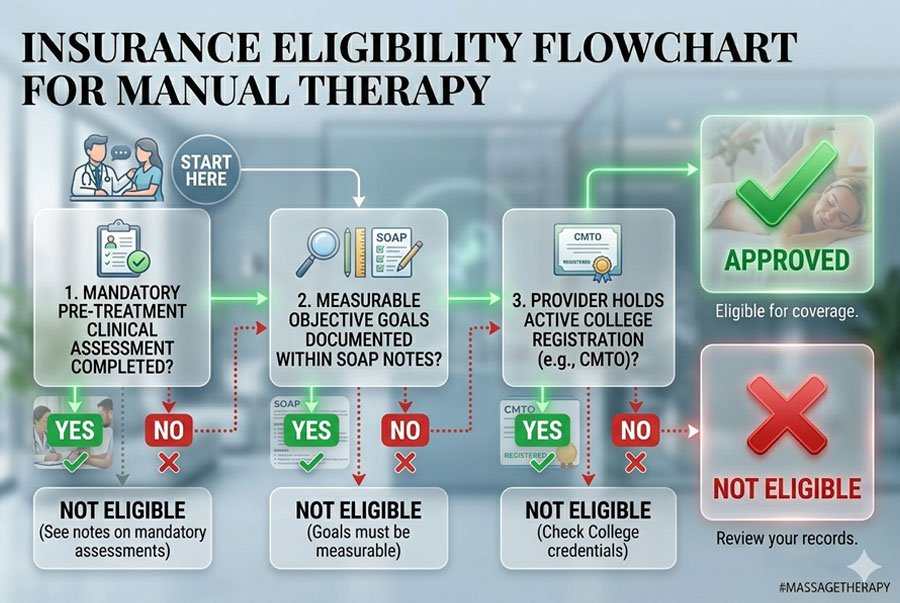
For an invoice to be successfully processed through extended health insurance benefits or automated direct-billing software like TELUS Health eClaims, the service must be performed by an active Registered Massage Therapist (RMT) in good standing with the College of Massage Therapists of Ontario (CMTO).
- A relaxation or Swedish massage performed by an un-registered “bodywork practitioner” or “spa technician” at a local wellness center is not eligible for insurance reimbursement, as it lacks regulatory oversight.
- Conversely, if an RMT performs a relaxation-focused treatment, the invoice remains eligible because the provider is bound by professional standards, complete health-history screening, and mandatory clinical charting protocols.
Guarding Against Claims Denials and Audits
Insurance companies increasingly audit paramedical clinics to verify that treatments are medically necessary rather than purely recreational. To ensure your claims stand up to insurance audits:
- Every Session Requires an Assessment: The therapist must conduct a targeted physical evaluation before starting treatment to justify the manual therapy.
- Strict SOAP Note Documentation: Every appointment must be backed by secure electronic medical notes documenting the subjective report, objective tests, actions taken, and the forward-looking plan of care.
- Clear Financial Invoicing: Invoices must explicitly list the practitioner’s verified CMTO registration number, the correct billing code, and the exact date and duration of the treatment session.
Strategic Comparison at a Glance
For clinic owners designing service menus and patients selecting the right care path, this structural breakdown highlights the key operational differences:
| Operational Feature | Relaxation Massage | Therapeutic Massage |
|---|---|---|
| Primary Goal | Stress reduction & nervous system calming | Structural repair & functional mobility recovery |
| Assessment Scope | General health-history screening | Detailed orthopaedic, ROM, and postural testing |
| Technique Focus | Effleurage, gentle kneading, long strokes | Myofascial release, trigger point, deep tissue |
| Anatomical Target | Superficial tissue layers & sensory receptors | Deep muscle fibers, tendons, and joint capsules |
| Insurance Adherence | Varies by provider credentials | Highly reimbursable when backed by RMT documentation |
Choosing the Right Care Path
Neither treatment model is inherently superior; instead, they serve completely different roles within a well-rounded health strategy. If your primary goal is to lower systemic cortisol levels, ease generalized work fatigue, and decompress mentally, a relaxation-focused approach is a highly effective option.
However, if you are recovering from an athletic injury, dealing with chronic lower back pain from desk work, or managing post-surgical scar tissue, a dedicated plan of therapeutic massage is a necessary medical intervention. By establishing a clear, evidence-based distinction between these two modalities, the RMT Clinic Network ensures every patient receives the exact level of care, structural targeting, and billing clarity required to support long-term physical health.

Author: Henry Tse
Henry Tse, Founder and CEO of the RMT Clinic Network Organization—an integrated platform created to connect patients with trusted para-medical providers while helping practitioners build stronger, more profitable clinics using practical, real-world business systems. After launching, operating, and selling multiple wellness businesses, I repeatedly saw the same two challenges: patients struggled to find the right care close to them, while practitioners struggled to attract consistent bookings and build predictable, compliant, and sustainable businesses. I created the RMT Clinic ecosystem to solve both problems. Through our Canada-wide “near me” directory, specialized brand marketing solutions, and step-by-step training academy, we help patients discover qualified providers while giving Registered Massage Therapists and clinic owners the systems, tools, and strategies needed to turn their professional skills into scalable businesses. Core Values Innovation • Empowerment • Community Professional Background * Vice President and General Manager, Canadian Small Business Institute: 15 years as a senior business consultant and trainer. * Direct Marketing and Advertising, 1997–Present: Strategy, brand positioning, lead generation, and business development. * Wellness Clinic Owner and Operator, 2005–Present: Launched and operated nine clinics, with three active RMT clinics currently under management. If you are an RMT or clinic owner looking for more bookings, stronger...